

As AI accelerates vulnerability discovery and weaponization, the gap between detection and remediation has become cybersecurity’s most urgent challenge. Attackers are now exploiting vulnerabilities in days, sometimes before patches are even available while most organizations still rely on manual, fragmented remediation processes that take weeks to execute.
This Cyber Risk Series will explore why traditional remediation models are no longer sufficient in the post-Mythos era, and what must replace them. We’ll examine how leading organizations are shifting from human-speed, ticket-driven workflows to a new operational model built for machine-speed risk reduction.
Join us to learn how to operationalize three essential capabilities for this new era: hyper-prioritization that isolates truly exploitable risk, autonomous remediation that acts with speed and precision, and AI-driven detection that delivers high-fidelity signals early enough to matter. We’ll also address the critical question at the heart of autonomous remediation: trust. From exploit validation and phased deployment to rollback safeguards and patchless mitigation, we’ll examine the principles, safeguards, and strategies that can help organizations automate remediation with greater confidence while maintaining operational resilience.
The future of remediation is not simply faster patching. It is the ability to reduce validated risk continuously, safely, and at scale. This Cyber Risk Series will provide both strategic perspective and practical guidance for building a remediation strategy designed for the speed, scale, and realities of the Mythos era.
June 10, 2026
9:00 AM PT – 12:00 PM PT
Don’t miss the opportunity to learn from industry experts. Register now.
Featuring

Ashish Rajan
CISO of TechRiot.io and Co-Host of AI Security Podcast

Rich Mogull
Chief Analyst
Cloud Security Alliance

Richard Stiennon
Chief Research Analyst
IT-Harvest
Howie Altman
CTO
Converge
Ben Beeson
Client Advisor
Symphony Risk Solutions

Sumedh Thakar
President & CEO
Qualys

Saeed Abbasi
Head of Qualys Threat Research Unit (TRU)
Qualys
Lavish Jhamb
Product Manager
Qualys
Kunal Modasiya
SVP of Product Management
GTM and Growth
Qualys
Agenda
9:00 AM PT
Claude Mythos: When AI Finds the Bug First
AI is finding vulnerabilities faster than ever before. With initiatives like Anthropic’s Project Glasswing and OpenAI’s Daybreak, frontier models are rapidly advancing cyber capabilities, while new model generations continue to arrive within months. But the real shift isn’t the model, it’s how organizations operationalize them.
In this talk, Ashish Rajan explores what happens when AI finds the bug first, why vulnerability discovery is becoming commoditized, and how security teams can build an AI harness that integrates with existing security operations to accelerate detection, validation, and response. The future advantage belongs to the organizations that can act at machine speed.
Ashish Rajan
CISO of TechRiot.io and Co-Host of AI Security Podcast
9:15 AM PT
The Myth of “You Can’t Patch Your Way Through Mythos”
Zero-day vulnerability discovery is no longer the hardest problem in cybersecurity; zero-day remediation holds that title.
In a post-Mythos world, frontier artificial intelligence models can weaponize discovered flaws within hours of a patch release. In this session, President & CEO of Qualys, Sumedh Thakar will explore how AI rewrites the timeline from exploitation to remediation. He will discuss the importance of hyper-prioritization, exploit validation, and autonomous remediation in the age of AI, and how organizations can be more effective in their cyber risk management.
Sumedh Thakar
President and CEO
Qualys
9:30 AM PT
Cybersecurity A.M. (After Mythos): How AI-Powered vulnerability discovery changes everything for security programs
We’ve been talking about AI changing cybersecurity for years. Mythos is when it actually happens. Anthropic’s vulnerability discovery system — and the wave of competitors right behind it, breaks the timing assumptions every security program is built on. Patch cycles, risk acceptance, even how we measure success start to crack when AI finds bugs at machine speed and scale. This session unpacks what Mythos and similar systems really do, how the attacker-defender asymmetry shifts in attackers’ favor, and what CISOs need to start doing this quarter. You’ll leave with three working concepts: VulnOps, Mythos-ready security programs, and minimum viable resilience, plus a practical roadmap for the transition from BM (Before Mythos) to AM (After Mythos).
Rich Mogull
Chief Analyst
Cloud Security Alliance
10:00 AM PT
The Patching Capacity Paradox
In this Cyber Risk Series session, join Saeed Abbasi, head of the Qualys Threat Research Unit (TRU), for a discussion on new Qualys remediation benchmark research conducted in partnership with the Verizon DBIR team. Based on more than 1 billion anonymized remediation records across a period of four years, the research includes insights from Qualys’ CISA KEV survival analysis. The findings highlight a growing “Patching Capacity Paradox” – organizations remediating more vulnerabilities than ever, yet exposure continues to grow as vulnerability volume outpaces operational capacity.
Saeed Abbasi
Head of Qualys Threat Research Unit (TRU)
10:30 AM PT
AI vs. Mythos: Fighting Machine-Speed Attacks with AI-First Defense
What happens when attackers use AI to discover, weaponize, and exploit thousands of new vulnerabilities faster than defenders can react? Weaponizing frontier models represents a new class of adversary: one that turns vulnerability discovery, exploit development, and targeting into an automated, machine-speed campaign. Traditional defenses, built around human response cycles and known indicators, cannot keep up.
This webinar explores how AI-first defenses change the equation. We will examine how security teams can use AI to anticipate attacker behavior, prioritize exposure, automate detection engineering, accelerate response, and defend at the same speed attackers operate. The session will focus on practical strategies for moving from reactive security to adaptive, autonomous defense.
Richard Stiennon
Chief Research Analyst
IT-Harvest
11:00 AM PT
Modernizing Cyber Insurance for Risk Reduction In the Age of AI
Cyber insurance is a vital part of the risk management equation. Yet, most underwriters still rely on self-reported static questionnaires that are time-consuming, inconsistent across organizations, and disconnected from the reality of your security program. The result is premiums based on assumptions about security practices, not evidence. Qualys and Converge are aiming to change that with an offering to potentially lower cyber insurance premiums using evidence-based reporting around an organization’s real-time risk posture.
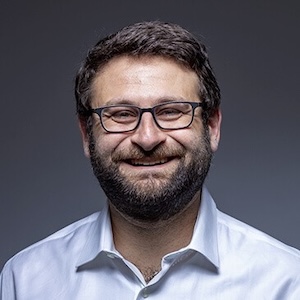
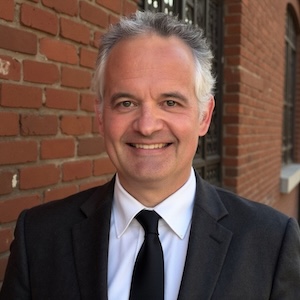
Join Ben Beeson of Symphony Risk and Howie Altman of Converge as they discuss the need for the cyber insurance market to modernize the cyber insurance intake process, the role of InsureTech in reducing cyber risk, and strengthening outcomes in today’s threat landscape. This session explores how data-driven insights, unified visibility, and autonomous remediation can help teams move faster and operate with greater confidence.
Howie Altman
CTO
Converge
Ben Beeson
Client Advisor
Symphony Risk Solutions
11:30 AM PT
Stay Ahead of Threats with Qualys TruRisk Eliminate
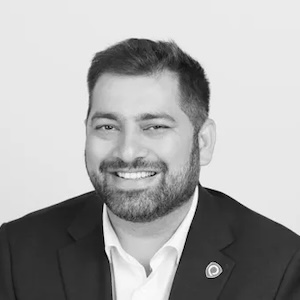
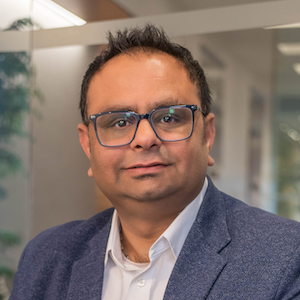
As remediation demands increasingly exceed what traditional processes can sustain, Qualys’ Kunal Modasiya and Lavish Jhamb will examine how organizations can evolve from reactive patch management to autonomous, risk-based remediation. Learn how exploit validation, continuous re-validation, and intelligent prioritization help security teams focus on the small percentage of vulnerabilities that represent true exploitable business risk.
Lavish Jhamb
Product Manager
Qualys
Kunal Modasiya
SVP of Product Management
GTM and Growth
Qualys